AQA GCSE Science Revision Guides: A Comprehensive Plan (2026)
Navigating AQA GCSE Science in 2026 demands focused revision. Expert-written notes, quizzes, and past papers are crucial, aligning with the syllabus for confident exam preparation.
Embarking on AQA GCSE Science revision requires a strategic approach, especially with the 2026 exams looming. This journey demands understanding the scope of the syllabus and tailoring your study methods accordingly. Resources abound, from expertly crafted notes and engaging quizzes to authentic past papers and challenging exam-style questions.
The AQA syllabus is designed to build a strong foundation in scientific principles, progressing to higher-level concepts suitable for grades 7-9. Successful revision isn’t simply about memorization; it’s about grasping core ideas and applying them effectively. Consider your learning style – are you a visual learner, benefiting from videos and diagrams, or do you prefer a more hands-on approach with practice questions?
Don’t underestimate the value of seeking guidance from your teachers and utilizing school resources. Furthermore, platforms like The Student Room offer valuable subject-specific advice articles. A well-structured plan, combined with consistent effort, will pave the way for exam success. Remember to prioritize topics based on their weighting in the exams and your individual strengths and weaknesses.
Understanding the AQA Combined Science Trilogy (2026)
The AQA Combined Science Trilogy is a popular pathway, covering Biology, Chemistry, and Physics in a cohesive manner. For the 2026 exams, understanding its structure is paramount. This course is designed for students aiming for grades 4-9, providing a broad scientific foundation.
The Trilogy consists of six papers – two in each science discipline. Revision should reflect this structure, dedicating sufficient time to each area. Focus on understanding the interconnectedness of the sciences; concepts often overlap and reinforce each other. Resources specifically tailored to the Trilogy are readily available, including predicted exam papers and mark schemes for the Higher Tier.
Remember that Paper 2 currently lacks a Physics component, so concentrate your efforts accordingly. Utilize past papers to familiarize yourself with question styles and mark allocation. Online quizzes and tests offer a convenient way to assess your understanding and identify areas needing further attention. Effective revision involves consistent practice and a clear understanding of the Trilogy’s scope.
AQA Separate Sciences: A Guide to the Curriculum
For students pursuing AQA Separate Sciences – Biology, Chemistry, and Physics individually – the curriculum is more in-depth and demanding. This route is ideal for those aspiring to achieve the highest grades (7-9) and potentially continue with A-Level studies.
Each science is assessed by two papers, resulting in a total of six GCSEs. Revision must be meticulously planned, allocating sufficient time to each subject’s extensive content. Resources should be subject-specific, focusing on the detailed knowledge required for Separate Science. Expert-written notes and exam-style questions are invaluable tools.
Unlike Combined Science, Separate Sciences maintain a full Paper 2 for all three disciplines. Past papers are crucial for understanding the higher-level questioning and application of knowledge. Online quizzes and tests can pinpoint areas for improvement. Remember to leverage resources aligned to the latest AQA specifications, ensuring your revision is current and effective.
Key Revision Resources for AQA GCSE Science
Successful AQA GCSE Science revision hinges on utilizing the right resources. A cornerstone is access to comprehensive notes, meticulously covering the syllabus content for both Combined Science and Separate Sciences. These should be supplemented with targeted quizzes, designed to reinforce understanding and identify knowledge gaps.
Past papers are indispensable; practicing with these builds exam technique and familiarity with question styles. Look for resources offering mark schemes for self-assessment. Online platforms provide a wealth of materials, including exam-style questions and interactive tools.
Don’t underestimate the value of videos and interactive simulations to visualize complex concepts. The Student Room offers subject-specific advice articles, providing valuable insights. Free GCSE revision resources and past papers are readily available online. Remember to prioritize resources aligned with the latest AQA specifications to ensure relevance and accuracy.
Utilizing Past Papers for Effective Revision
Past papers are paramount for effective AQA GCSE Science revision. They aren’t just about practicing answers; they’re about understanding the way questions are asked and the expected level of detail. Begin by completing full papers under timed conditions, simulating the exam environment. This builds stamina and time management skills.
Crucially, always review your answers against the official mark scheme. Identify areas of strength and weakness, focusing your subsequent revision on those weaker topics. Don’t simply memorize answers; strive to understand the underlying scientific principles.
Repeatedly tackling past papers builds confidence and familiarity. Utilize predicted exam papers for 2026 to gain an edge. Analyze common themes and question types. Remember, consistent practice, coupled with thorough self-assessment, is the key to maximizing your potential and achieving a higher grade.
Predicted Exam Papers & Resources (2026 Focus)
Preparing specifically for the 2026 AQA GCSE Science exams requires targeted resources. Predicted exam papers, alongside detailed mark schemes, offer invaluable practice for the Higher Tier, covering all three Paper 1 exams and the Biology & Chemistry sections of Paper 2. Note that currently, no Physics Paper 2 predictions are widely available.

These resources aren’t about predicting the exact questions, but rather mirroring the style, difficulty, and content focus expected in the 2026 assessments. Supplement these with comprehensive revision guides, online quizzes, and topic-specific question banks.
Focus on understanding core concepts and applying them to exam-style questions. Regularly assess your progress and adapt your revision strategy accordingly. Utilizing these focused resources will significantly boost your confidence and preparedness for the challenges ahead, maximizing your potential for success.
Topic-Based Revision: Biology
Effective AQA GCSE Biology revision necessitates a structured, topic-by-topic approach. Begin with core concepts like cell structure, organization, and transport mechanisms. Thoroughly understand photosynthesis, respiration, and the intricacies of genetic inheritance, including DNA and chromosomes.
Focus on ecological relationships, food chains, and the impact of environmental changes. Master key biological processes like homeostasis and the nervous system. Utilize revision resources offering notes, questions, and past paper questions specifically tailored to each topic.
Don’t just memorize facts; strive to understand the underlying principles and how different biological systems interact. Regularly test yourself with quizzes and exam-style questions to reinforce learning and identify areas needing further attention. A strong foundation in these topics is crucial for success.
Topic-Based Revision: Chemistry
A successful AQA GCSE Chemistry revision plan demands a systematic approach to core topics. Start with atomic structure, the periodic table, and bonding – ionic, covalent, and metallic. Grasp the concepts of chemical reactions, including rates, equilibrium, and energy changes.
Thoroughly revise acid and base chemistry, salts, and electrolysis. Understand the properties and uses of key chemical compounds, like polymers and alcohols. Focus on organic chemistry, including hydrocarbons and functional groups.
Utilize resources providing detailed notes, topic-specific questions, and past paper practice. Don’t simply memorize equations; understand the underlying chemical principles. Regularly test your knowledge with quizzes and exam-style questions. A firm grasp of these concepts is vital for achieving a high grade.
Topic-Based Revision: Physics
Effective AQA GCSE Physics revision requires a structured approach to fundamental concepts. Begin with motion, forces, and energy – understanding kinetic and potential energy, Newton’s laws, and energy transfer. Master electricity and magnetism, including circuits, electromagnetism, and transformers.
Thoroughly revise wave properties, such as transverse and longitudinal waves, the electromagnetic spectrum, and sound. Focus on space physics, including stars, planets, and the universe. Understand nuclear physics, including radioactivity and nuclear fission.
Employ resources offering detailed notes, topic-focused questions, and past paper practice. Prioritize understanding the principles behind equations, rather than rote memorization. Regularly assess your knowledge with quizzes and exam-style questions. A solid foundation in these areas is crucial for exam success.
Revision Techniques for Different Learning Styles
Adapting revision to your learning style maximizes effectiveness for AQA GCSE Science. Visual learners benefit from diagrams, mind maps, and videos illustrating complex concepts. Auditory learners thrive with discussions, recordings of notes, and explaining topics aloud.
Kinesthetic learners excel through hands-on activities, experiments (even simulated ones), and creating models. Reading/writing learners prefer traditional note-taking, summarizing information, and practicing exam questions.
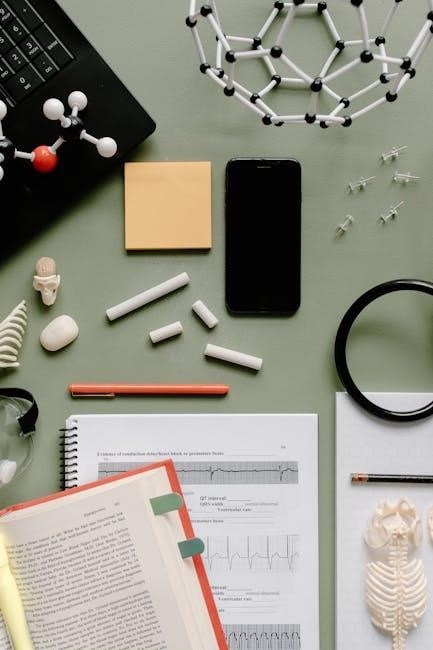
Combine techniques for a multi-sensory approach. Utilize flashcards, practice papers, and online quizzes. Break down large topics into smaller, manageable chunks. Regularly self-test to identify knowledge gaps. Remember, consistent, tailored revision is key. Explore interactive tools and videos to reinforce understanding and maintain engagement throughout your preparation.
Foundation Tier vs. Higher Tier Revision Strategies
AQA GCSE Science revision differs significantly between Foundation and Higher tiers. Foundation tier students should prioritize securing core knowledge and understanding fundamental concepts. Focus on applying knowledge to simpler questions and mastering key definitions. Consistent practice with basic calculations is essential.
Higher tier students require a deeper understanding and the ability to apply knowledge to complex, multi-step problems. Emphasis should be placed on analyzing data, evaluating experimental methods, and tackling challenging exam-style questions. Thorough revision of the entire syllabus is crucial.
Both tiers benefit from utilizing past papers, but Higher tier students should focus on those designed for the higher grade range. Regularly assess your understanding and adjust your revision strategy accordingly. Seek guidance from teachers to identify areas needing improvement.
Maximizing Marks in Exam-Style Questions
Achieving top marks in AQA GCSE Science exams hinges on mastering exam-style questions. Carefully read each question, identifying key terms and the command word (e.g., ‘describe’, ‘explain’, ‘evaluate’). Plan your answer before writing, structuring it logically with clear paragraphs.
Show your working in calculations, even if the answer is incorrect – partial credit is often awarded. Use scientific terminology accurately and precisely. For extended response questions, provide detailed explanations, supporting your points with evidence and reasoning.
Pay attention to the number of marks allocated to each question, tailoring the length and detail of your answer accordingly. Review past papers, focusing on the mark schemes to understand what examiners are looking for. Practice applying your knowledge to a variety of question types.
Online Quizzes and Tests for AQA GCSE Science
Leveraging online quizzes and tests is a powerful revision strategy for AQA GCSE Science. Numerous platforms offer targeted practice, reinforcing key concepts and identifying knowledge gaps. These resources often mirror the format of actual exam questions, building familiarity and confidence.
Many websites provide free online science tests based on past papers, allowing students to assess their understanding across various topics – Biology, Chemistry, and Physics, including Combined Science. Look for quizzes categorized by difficulty level (Foundation or Higher) to tailor your revision.
Utilize these tools to track your progress, pinpoint areas needing further study, and improve your exam technique. Remember to analyze incorrect answers, understanding the underlying principles. Supplement online resources with teacher-provided materials and past paper practice.
The Role of Teachers and School Resources
Teachers remain invaluable guides throughout your AQA GCSE Science revision journey. Don’t hesitate to seek their advice, clarification on challenging topics, and feedback on your progress. They possess in-depth knowledge of the syllabus and can offer tailored support.
Schools typically provide a wealth of resources, including revision materials, past papers, and practice questions. Actively utilize these offerings, attending revision sessions and workshops when available. Collaboration with peers can also enhance understanding and motivation.
Remember that teachers can offer insights into exam expectations and effective revision techniques. They can also help you identify your strengths and weaknesses, allowing you to focus your efforts strategically. Proactive communication with your science teachers is key to maximizing your revision potential.
Subject-Specific Advice Articles (The Student Room)
The Student Room offers a valuable collection of subject-specific advice articles designed to support your AQA GCSE Science revision. These resources, created in collaboration with educators, provide targeted guidance for Biology, Chemistry, and Physics.
Expect to find articles covering effective revision strategies, common exam pitfalls to avoid, and techniques for maximizing marks in exam-style questions. They often delve into specific topics within each science, offering detailed explanations and practice exercises.
These articles are particularly useful for understanding how to approach different question types and interpret exam commands. They can also provide insights into the examiners’ perspective, helping you anticipate what they are looking for in your answers. Regularly consulting The Student Room’s advice section can significantly boost your confidence and performance.
Free GCSE Science Revision Resources – A Roundup
Numerous free resources are available to supplement your AQA GCSE Science revision. A wealth of past papers, readily accessible online, provide invaluable practice for exam conditions and familiarization with question styles.
Websites offer free online science tests based on these past papers, allowing you to assess your understanding of key topics and identify areas needing further attention. Don’t underestimate the power of utilizing these readily available materials.
Explore resources covering Biology, Chemistry, and Physics, and even combined science options. Many platforms also include IGCSE resources that can be applicable and beneficial to your AQA preparation. Remember to supplement these with advice from your teachers and school-provided materials for a comprehensive approach to revision.
IGCSE Resources Applicable to AQA GCSE
Interestingly, certain IGCSE (International GCSE) resources can effectively complement your AQA GCSE Science revision. While curricula differ, substantial overlap exists in core scientific principles, particularly in Biology, Chemistry, and Physics.
IGCSE materials often provide alternative explanations and practice questions, broadening your understanding and reinforcing key concepts. Exploring these resources can be particularly helpful if you find yourself struggling with specific topics within the AQA syllabus.
Look for IGCSE revision guides, past papers, and online quizzes that cover similar content to the AQA specification. Remember to critically evaluate the resources, ensuring alignment with the AQA syllabus. Utilizing IGCSE materials strategically can provide a valuable supplementary learning experience, enhancing your overall preparation and exam confidence.
Beyond Textbooks: Videos and Interactive Tools
Supplementing traditional textbooks with dynamic resources is vital for effective AQA GCSE Science revision. Videos offer visual explanations of complex concepts, catering to different learning styles and enhancing comprehension. Platforms like YouTube host numerous channels dedicated to GCSE Science, providing topic-specific tutorials and worked examples.
Interactive tools, such as simulations and virtual labs, allow you to actively engage with scientific principles, fostering deeper understanding. These resources can make learning more enjoyable and memorable, particularly for practical topics. Online quizzes and tests, based on past papers, provide immediate feedback on your progress.
Explore websites offering interactive diagrams and animations to visualize abstract concepts. Combining these diverse resources with textbook study creates a well-rounded revision strategy, maximizing your chances of success in the AQA GCSE Science exams.
Final Exam Preparation Checklist
As the AQA GCSE Science exams approach, a systematic checklist ensures comprehensive preparation. First, review all key topics, focusing on areas of weakness identified through past papers and quizzes. Ensure you’ve completed predicted exam papers, meticulously analyzing mark schemes to understand examiner expectations.
Next, consolidate your notes, creating concise revision summaries for quick recall. Practice exam-style questions under timed conditions, simulating the real exam environment. Prioritize sufficient sleep and a balanced diet in the days leading up to the exams to optimize cognitive function.
Finally, double-check your exam schedule and gather all necessary materials – pens, calculator, ruler. Remember to seek advice from teachers and utilize available school resources. A calm and organized approach will maximize your performance and build confidence on exam day.